
COPD COPD home | Courage and Information: book | BUY Courage and Information | COPD TODAY: magazine | LINKS | Editorial Board |
COPD TODAY: A Life Challenge A Life Challenge | Resources: 1-Diagnosis and Treatment | 2-Adjustment and Support | 3-Information | 4-Newsletters and Organizations | Editorial
COPD: A life challenge —Mary Grauerholz introduces us to the experiences of people living with COPD and of people who love and care for them. In related articles and resources we explain and expand the ideas in the story. Readers can use these resources to understand and cope with COPD. Please be aware that each person is unique and their treatment plan is an individual prescription. Use what you learn here to work closely with your doctor and other health professionals.
HEALTHY RESOURCES
HealthyResources Home
|
Books | COPD
|
Phantom
Sleep Apnea |
Blog: Chronic Conditions
|
Sleep Apnea Newsletter
|
Privacy
Policy |
New Technology Publishing |
COPD: A life challenge
A diagnosis of Chronic Obstructive Pulmonary Disease doesn't spell the end of an active life, but it must be dealt with effectively
By Mary Grauerholz
Recognition
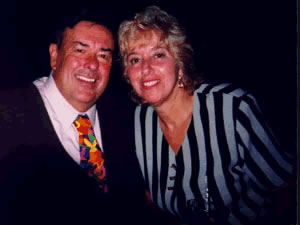
"Herb Cowles knew something wasn’t right. His breathing was labored, and the sound of his breath as he exhaled was too noticeable to be normal. But denial ran strong in his blood. It was the late-1980s, Cowles recalls, and he was in the midst of what many consider the prime years of life, his fourth decade. He had a busy life, working as a railroad conductor and participating in a theater group and other social activities with his wife, Kathryn.
 It
was the theater that finally provided the opening for Cowles’
recognition of his health problems. When he and Kathryn attended
performances, he recalls, other patrons in the darkened theater
could hear his labored breathing. As much as Cowles tried to ignore
it, Kathryn became self-conscious. "She said everyone could hear
my breathing," Cowles says. Kathryn encouraged him to seek help,
but he countered that he just needed to lose a few pounds, get in
shape. The gradual onset of his disease made it easy to ignore,
but not for long.
It
was the theater that finally provided the opening for Cowles’
recognition of his health problems. When he and Kathryn attended
performances, he recalls, other patrons in the darkened theater
could hear his labored breathing. As much as Cowles tried to ignore
it, Kathryn became self-conscious. "She said everyone could hear
my breathing," Cowles says. Kathryn encouraged him to seek help,
but he countered that he just needed to lose a few pounds, get in
shape. The gradual onset of his disease made it easy to ignore,
but not for long.
Diagnosis
In November 1988, at the age of 45, Herb, a nonsmoker at the time, was diagnosed with Chronic Obstructive Pulmonary Disease (COPD). Even then, denial continued its hold. "I wasn’t overly concerned," Cowles says. "I didn’t think it was anything too bad, because I was still fairly early in the disease. Since then," he says with a rueful chuckle, "it has changed a good deal."
COPD is an umbrella disease that refers to permanent lung damage in which there is an obstruction to air flow during exhalation. It is usually caused by longterm smoking. Emphysema is the most common form of COPD, although the disease also encompasses chronic bronchitis and asthma. According to the National Lung Health Education Program, (NLHEP) smoking is responsible for 90 percent of COPD; other causes include serious infections, chemical exposure, and an inherited defect called Alpha-1 antitrypsin deficiency emphysema. This condition causes the lack of material that protects the lung.
Response, treatment and rehabilitation
Herb Cowles retired three years after his diagnosis and now lives in Dennisport, Mass. Cowles’ doctors determined that his COPD was from occupational exposure to diesel fumes. His smoking habit—he smoked from age 25 to 36—also may have played a role. Since his diagnosis 12 years ago, Cowles’s disease has worsened, but lifestyle enhancements are helping to allay the effects. Whereas 12 years ago his breathing was not affected enough to qualify him for a handicap sticker for his car, he now easily qualifies, he says. He requires more inhaled medication, and his overall stamina has decreased.
He measures the progression of his COPD by his abilities rather than his disabilities. "I get around. I can participate in daily activities," Cowles says. "I just don’t have much stamina. If I walk up a flight of stairs, I get winded." He offsets this lack of strength with a pulmonary rehabilitation exercise class three days a week at a local hospital that consists of treadmill walking, stationery bike riding and non-aerobic exercises sitting in a chair. People in the Cape COPD Support Group know Herb Cowles as a warm, compassionate, upbeat-but-realistic individual with COPD.
Getting good care and finding support
Dr. George Holmes, an internist with Harvard Vanguard Medical Associates in Braintree, Mass., diagnosed Herb Cowles. Dr. Holmes still treats patients with COPD and sees each one as unique. "I treat them all as individuals," Dr. Holmes says. "Many things, many problems are associated with COPD." He educates his patients as treatment continues, working through each unique set of symptoms. "Dr. Holmes’ diagnosis and follow-up were right on target," Herb Cowles says. "As I look back, I’m pleased with the way the doctors handled it," he says. However not everyone with COPD is as lucky at getting good care as Cowles. They may have to seek a diagnosis, search hard for a doctor who teaches them about their condition, and work to obtain access to pulmonary rehab and to a support group.
Information and education are the keys
People newly diagnosed with COPD should make sure the diagnosis is accurate and complete. Information about diagnosis and treatment for people with COPD is presented in Courage and Information for Life, a handbook for people with COPD.
Experts in COPD treatment suggest that people who have been diagnosed with COPD should make sure they completely understand what it really means. While at first it may appear to be a devastating message, much can be done to improve all aspects of the disease. They should obtain materials from other sources and talk with their physician and others with the same problem. If all the items don't match up or you cannot get the answers you require, they should get a second opinion to be sure they have a correct diagnosis. But once sure that the diagnosis is correct, an aggressive treatment plan is needed. A treatment plan may involve prescription medications, smoking cessation, exercise, and more. The earlier the person with COPD can discover the disease, the better the chances for a relatively healthy life.
The American Lung Association, which works to prevent lung disease and promote lung health, offers a range of pamphlets and brochures to the newly diagnosed COPD patient. "The packet is tailored to the individual’s needs and might include information on COPD, medications, and lung diseases in general," Topham says. Another source of information is available through the National Jewish Medical and Research Center, a leading center for pulmonary diseases; anyone can call their toll free line to talk with to a nurse or respiratory therapist.
"Other people with COPD are also a good source of information," Herb Cowles says. "Join a support group. The most important point is education," he advises. "Support groups also enable patients to advocate for themselves," he says. "I had very good medical help, but not everybody is going to get that," he says. "However," he notes, "don’t expect a support group to be a completely optimistic experience. You get the downside too, because you see how bad you’re going to get," Cowles says. "It’s unfortunate and may make you feel bad, but it’s educational." He joined his first support group, a nurse-staffed group at Massachusetts Respiratory Hospital, in 1990. He is currently a member of the Cape COPD Support Group which serves people on Cape Cod. Local hospitals and pulmonary rehab programs may organize education and support groups. The American Lung Association has a roster of Better Breather support groups, says Kristin Topham, community program coordinator for the Massachusetts office.
Another patient advocate, Bill Horden, reaches out to everyone with COPD through the COPD Advocate and newsletter, seeking to educate people to a better understanding of COPD while offering a critical view of current medical and political constraints on treatment.
Celeste Belyea began publishing The Pulmonary Paper to support and educate people with COPD and other lung diseases, 11 years ago. Today she serves 10,000 subscribers from her office in Ormond Beach, Fla. Belyea, a registered nurse and respiratory therapist, encourages those with COPD to stay involved with life and loved ones. "They should learn as much as they can about COPD and stay involved," she says. "I can’t tell you how important that is. I have seen some people get the diagnosis and never leave their house again, except to go to the doctor’s."
The importance of families, friends, and support groups
Kathryn Cowles, Herb’s wife, knows well the effects of COPD on families. "It certainly totally changed our lives. I became the breadwinner," she says. Kathryn Cowles is an assistant chief probation officer for the Commonwealth of Massachusetts. "Personally our lives changed, our dreams of retirement. And what we can do day to day, because we don’t know how he’ll be. It’s like when you like to dance, and the dance stops." Herb’s disease has also given her life an element of the unknown. "Most people don’t know what tomorrow’s going to bring, but this is in your face every day."
Being around other people with COPD is a powerful step to staying well and can give a shot of courage. According to experts, the most important and first step for the newly diagnosed is to quit smoking. People with COPD have to give up smoking, and avoid contact with smoke.
The prognosis for most people is very good. Depending on how far the disease has progressed when they are diagnosed, their age, and their determination, they can live with this disease for 20, 40, or more years. If they do the right things, they can slow the progression of the disease and many can live out their normal lifespan.
Resources for COPD: A life challenge
The following links provide references and resources to the issues discussed in this story.